

Understanding Candlestick and Chart Patterns
📊 Understand key candlestick and chart patterns to decode price trends in trading. Learn practical tips and examples tailored for India's markets and risk management.
Edited By
George Phillips
Candlestick and chart patterns are essential tools for anyone serious about stock trading, especially in the Indian markets where volatility often creates opportunities—and risks. These patterns provide visual clues about market sentiment and potential price direction by analysing historical price data. They form the backbone of technical analysis used by traders, investors, and analysts alike.
At its core, a candlestick chart summarises trading activity for a stock over a specified period, showing the open, high, low, and close prices. Patterns arise from grouping these candlesticks in specific shapes that signal bullish or bearish trends. For instance, the Hammer candlestick often suggests a potential reversal from a downtrend, while the Doji indicates market indecision and possible trend change.

Chart patterns go a step further by examining formations created by price movement over time. Classic examples include Head and Shoulders, Double Top, and Cup and Handle. These shapes help traders anticipate trend continuation or reversal, which is useful for making entry or exit decisions.
Skillfully recognising these patterns saves you from chasing false signals and helps lock profits in dynamic market conditions.
For Indian traders, understanding these patterns is even more practical when combined with contextual factors like sector performance, economic announcements, or foreign fund flows that heavily influence the Sensex and Nifty indices. For example, a bullish Cup and Handle formed by a pharmaceutical stock during a period of strong government healthcare initiatives might strengthen the trade's conviction.
Several PDF guides are available to help beginners and advanced traders learn these patterns systematically. A good PDF will feature clear illustrations, real market examples, and tips on spotting reliable patterns versus misleading formations.
When using these resources:
Focus on the most common and reliable patterns first to avoid confusion.
Practice identifying patterns on live charts of NSE or BSE-listed stocks.
Combine pattern analysis with volume data for better accuracy.
In summary, mastering candlestick and chart patterns helps decode market psychology, enabling you to predict price moves with higher confidence. Plus, well-designed PDFs make self-study flexible and efficient, catering to traders across tier-1 and tier-2 cities alike.
Candlestick and chart patterns form the backbone of technical analysis in stock trading. They offer visual clues about market behaviour, helping traders and analysts make informed decisions. Understanding these patterns enables you to predict potential price movements rather than relying solely on gut feeling or news alone.
Each candlestick consists of three parts: the body, the wick (or shadow), and the tail. The body shows the range between the opening and closing price within a set period. A filled body typically means the closing price was lower than the opening price (bearish), while a hollow or coloured body shows a higher close (bullish). The wicks extend above and below the body, indicating the highest and lowest prices reached during that time. Traders pay close attention to the length and position of these parts because they reveal price volatility and market strength.
For example, a long upper wick with a short body suggests sellers pushed prices down from high levels, signalling possible resistance. In contrast, a long lower wick implies buyers defended the price against further fall, often seen as a bullish sign.
Candlesticks also reflect market sentiment clearly. When you see several bullish candlesticks in a row, optimism is likely driving the prices up. Alternatively, multiple bearish candles hint at selling pressure. Importantly, sudden shifts in candlestick shapes can signal reversals or pauses in momentum. This is useful when you want to enter or exit trades, avoiding traps like false breakouts.
Chart patterns are formations created by the price movements of stocks or other assets on a chart. They help traders identify potential continuation or reversal of trends by observing how prices behave over time. Examples include head and shoulders, triangles, flags, and double tops or bottoms.
The primary purpose of recognising chart patterns is to forecast future price action with better odds. For instance, a breakout from a triangle pattern often suggests a strong move in the breakout direction, providing a clearer entry or exit point for traders.
While candlestick patterns focus on individual or small groups of candles revealing short-term market sentiment, chart patterns usually involve a broader view that captures price behaviour over longer durations. Candlesticks reflect immediate battle between buyers and sellers within the trading session. Conversely, chart patterns represent the overall structure formed by price swings and thus often indicate larger trend shifts.
To put it simply, candlestick patterns give quick clues on day-to-day or minute-by-minute market mood, whereas chart patterns provide a bigger picture of where the market may head next. Combining both helps traders fine-tune their timing and improve risk management strategies.
Mastering these basics gives you an edge to spot high-probability trades and avoid common pitfalls in Indian markets such as getting caught in sudden volatility or unreliable signals.
Understanding common candlestick patterns helps traders read market psychology quickly and make informed decisions. These patterns, formed by price action during specific periods, indicate potential reversals or continuations in a stock's trend. Knowing their meanings sharply improves timing for entry or exit, which is critical in volatile markets like NSE or BSE.
Doji represents indecision in the market. It forms when opening and closing prices are almost the same, creating a small or absent body with long wicks. In Indian trading, spotting a Doji near a support or resistance level signals a possible turning point. For example, if Reliance Industries’ stock forms a Doji after a series of gains, it might mean buyers are tiring and a correction could follow.
Hammer and Hanging Man are single candles with a small body and a long lower wick. The Hammer appears after a downtrend and suggests a bullish reversal, as sellers test lows but buyers push prices back up. The Hanging Man, appearing after an uptrend, warns of a possible bearish reversal. For instance, HDFC Bank shares showing a Hammer after falling prices may hint at recovery, while a Hanging Man could caution traders to tighten stops.
Marubozu candles have no wicks; the open equals the low and the close equals the high, or vice versa. They reflect strong momentum — a bullish Marubozu means buyers controlled the session fully, while a bearish one shows sellers in charge. In the context of Infosys stock, a bullish Marubozu breaking past resistance might trigger more buying.

Engulfing Pattern involves two candles where the second completely covers the first. A bullish engulfing pattern signals buyer strength overtaking sellers, often leading to upward movement. Conversely, a bearish engulfing warns of reversal downward. Such patterns are quite reliable in Indian markets when confirmed by volume spikes.
Morning Star and Evening Star are three-candle formations that mark reversals. The Morning Star indicates bullish reversal after a downtrend, with a small-bodied candle sandwiched between a bearish and bullish candle. The Evening Star signals a bearish reversal after an uptrend. For example, a Morning Star in Tata Steel stock might encourage an investor to consider buying, anticipating a rally.
Harami means "pregnant" in Japanese and shows a smaller candle entirely within the previous candle’s body. A bullish Harami during a downtrend suggests weakening selling pressure, while a bearish Harami in an uptrend hints at slowing buying momentum. Traders use this pattern to anticipate quieter phases before a larger move.
Mastery of these candlestick patterns can help you spot potential trend shifts early, improving your trading edge in the Indian stock market.
Remember to combine candlestick analysis with volume and broader market context to avoid false signals. While patterns like Doji or Engulfing offer valuable hints, confirmation from share price action or indicators strengthens your decisions.
Chart patterns help traders and investors understand the prevailing market trend and anticipate its continuation or reversal. Popular chart patterns are essential tools in technical analysis because they provide visual cues about buyers' and sellers' behaviour over time. Recognising these patterns allows you to make informed decisions on when to enter or exit trades, especially in the volatile Indian stock markets.
Flags and pennants signal brief pauses in the prevailing trend before the price continues in the same direction. Flags look like small rectangles slanting against the trend, while pennants form small symmetrical triangles. For example, during a strong uptrend in a stock like Reliance Industries, a flag pattern might appear when the price consolidates in a tight range before moving further upward.
These patterns indicate that traders are catching their breath, rather than reversing course. For intraday or short-term traders on the NSE or BSE, spotting these can highlight good opportunities to ride the trend with limited risk.
Rectangles represent periods where prices oscillate between two parallel lines, indicating strong support and resistance. This sideways movement suggests a balance of power between buyers and sellers. For instance, Infosys stock might trade between ₹1,400 and ₹1,450 for several days, forming a rectangle.
A breakout above or below this range offers actionable signals. A break above resistance typically leads to a continuation of the uptrend, while a breakdown suggests a downtrend. Traders often wait for volume confirmation to reduce false breakouts, especially in Indian markets where retail participation can distort patterns.
This classic reversal pattern signals a change from an uptrend to a downtrend or vice versa. It consists of three peaks: two shoulders with a higher peak—the head—in the middle. Take Tata Motors as an example; if it forms this pattern on its daily chart, traders watch for a neckline breakout as a strong signal to sell.
The head and shoulders pattern carries weight because it reflects a struggle between buyers and sellers, ultimately tipping in one direction. In India’s often volatile markets, this pattern can help avoid holding onto a position that may soon decline.
Double tops and bottoms are simple yet reliable reversal indicators. A double top happens when the price reaches a high twice but fails to break above, signalling resistance. Conversely, a double bottom shows two lows, marking support.
For example, Axis Bank’s price may hit ₹900 twice but fail to surpass it, warning traders of a potential fall. Identifying these patterns early helps in timing exits or entries to maximise returns and minimise losses.
Triangles, whether ascending, descending, or symmetrical, form as prices converge between two trendlines. An ascending triangle usually suggests a breakout upward, often seen in stocks with steady buying pressure like HDFC Bank. Descending triangles tend to break lower, reflecting selling pressure.
Symmetrical triangles are neutral patterns and traders often wait for a breakout to confirm direction. Triangles are valuable in India for spotting possible trend changes or continuation amidst uncertain market phases.
Recognising popular chart patterns like flags, rectangles, or head and shoulders adds clarity to market moves and can improve trading outcomes in Indian equity and commodity markets.
By combining these chart patterns with volume and other indicators, you get a more reliable picture of future price movements, helping you navigate India’s diverse stock environment smarter.
PDF resources offer a practical way to understand candlestick and chart patterns in stock trading. Their structured format helps traders grasp complex concepts clearly and refer back to them as needed. Since trading patterns rely heavily on visual cues, PDFs often include charts and real examples, which add considerable value.
One major benefit of PDF guides is their portability. You can download them on your laptop or mobile and review them anytime without needing internet connectivity. This suits traders in tier-2 or tier-3 cities where internet speed may fluctuate. For instance, a trader commuting in Mumbai's local trains can quickly revise pattern basics on their phone without relying on live web content.
Offline access also means you can study at your pace. No ads or pop-ups disturb your focus, making it easier to build foundational skills systematically before jumping into live trading.
PDFs generally arrange learning content logically, starting from basic patterns and moving to more advanced ones. They include numerous annotated charts and coloured graphics that illustrate price movements clearly. This visual emphasis is essential because recognising patterns depends on reading shapes and colour relations on candlestick charts.
For example, a PDF might show several candlestick examples of a “hammer” pattern with explanations of how it signals a possible trend reversal. This focused layout helps traders systematically identify and memorise important patterns rather than skim through scattered online content.
The National Stock Exchange (NSE) and Securities and Exchange Board of India (SEBI) publish PDFs that cover market fundamentals and technical analysis techniques, including chart patterns. Their materials are reliable, reflecting Indian market conditions, regulations, and trading practices.
Such official PDFs help traders understand not just the theory but also compliance and risk management aspects necessary for the Indian equity market. Using them can avoid confusion from misleading content common elsewhere.
Many respected trading books, such as "Japanese Candlestick Charting Techniques" by Steve Nison, have authorised PDF summaries and excerpts circulated online. Indian traders can benefit from these resources as they distil complex concepts into digestible chunks.
Additionally, some Indian authors focus on chart patterns tailored to NSE and BSE stocks, offering relevant examples from Sensex and Nifty 50 shares. Trying out these PDFs alongside paper or digital charts can accelerate learning and practical application.
Taking advantage of well-structured PDF guides lets you build a strong foundation in candlestick and chart pattern analysis while adapting to Indian market specifics.
Using these PDF resources for practice not only sharpens your observation skills but also boosts confidence, critical when making trading decisions under real market pressure.
Candlestick and chart patterns form the backbone of technical analysis, helping traders anticipate price moves. In the Indian context, applying these patterns requires recognising the unique dynamics of Indian markets like the National Stock Exchange (NSE) and Bombay Stock Exchange (BSE). These patterns help traders identify entry and exit points, especially when dealing with benchmark indices like Sensex and Nifty 50.
The Sensex and Nifty 50 represent the top performing stocks and sectors in India. Candlestick patterns in these indices often signal broader market sentiment shifts. For instance, a bullish engulfing pattern on the Nifty 50 often indicates momentum picking up across key sectors such as banking, IT, and FMCG. Many traders watch how individual stocks behave within these indices to align their positions with prevailing trends.
However, adapting these patterns to Indian stocks also means recognising factors such as liquidity and volatility unique to the market. Stocks in NSE and BSE can experience sharp swings due to domestic economic data, monsoon impacts, or government policy changes. These can sometimes create false breakouts or reversals, making it essential to validate patterns before acting.
One major caution is the influence of corporate announcements, quarterly earnings, and regulatory changes that can override technical patterns abruptly. For example, a positive candlestick pattern might suggest a buy, but an unexpected RBI policy announcement or SEBI regulation could quickly reverse the trend.
Moreover, Indian equities occasionally face sudden volatility from foreign institutional investor (FII) flows or geopolitical events. These factors can distort classic chart patterns, so traders should treat patterns as just one part of their decision-making toolkit, not a guaranteed signal.
Volume acts as a confirmation metric, showing the strength behind a price move. For example, a breakout from a triangle pattern accompanied by rising volume on NSE stocks like Reliance Industries or HDFC Bank strengthens the signal. Momentum indicators like the Relative Strength Index (RSI) or Moving Average Convergence Divergence (MACD) help filter false signals by revealing if an asset is overbought or oversold.
Combining candlestick patterns with these tools offers a better edge. Without volume confirmation, a pattern might fail, wasting your capital.
Pattern recognition alone can’t shield you from losses. Indian traders should combine these insights with strict stop-loss orders and position sizing based on their risk tolerance. For example, setting a stop-loss just below a candlestick pattern’s support level minimises downside if the market moves against you.
Diversifying across different sectors and not piling onto one pattern or stock also helps manage risks. Use chart patterns as a guide, but always add layers of risk controls to protect gains.
Successful trading in Indian markets comes from blending candlestick knowledge with volume analysis, momentum gauges, and risk discipline for sound decisions.
📊 Understand key candlestick and chart patterns to decode price trends in trading. Learn practical tips and examples tailored for India's markets and risk management.

📊 Learn how to read key market candlestick patterns for smarter trading decisions. Avoid common mistakes and improve your analysis skills effectively.

📊 Learn how candle chart patterns reveal market trends and guide your trading decisions. Understand key bullish & bearish signals to trade smartly.
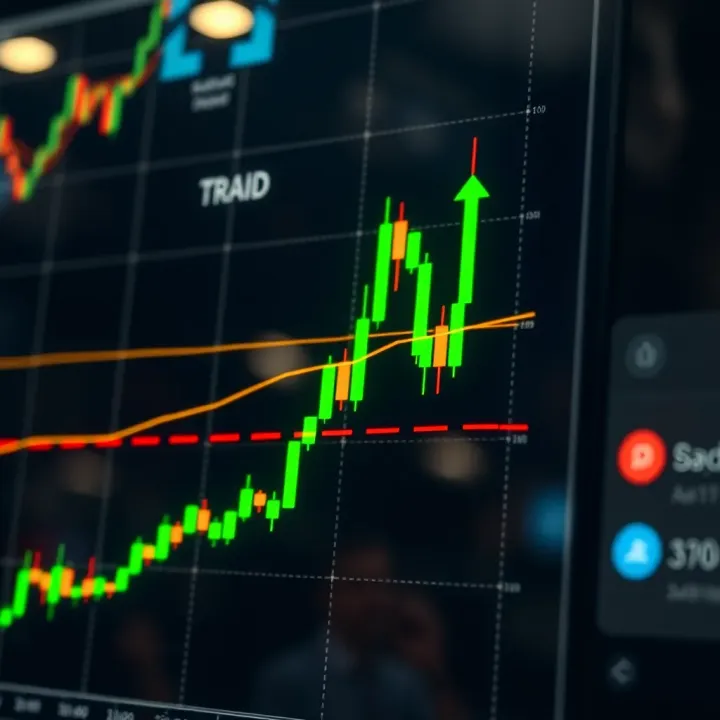
📈 Learn how bull candlestick patterns signal rising stock prices and buying strength. Master identifying key shapes, combining tools, and avoiding common trading mistakes.
Based on 5 reviews