
Stocks Allowed for Intraday Trading in India
📈 Explore how to pick stocks for intraday trading in India! Learn about liquidity, volatility, major exchanges & get tips to handle risks smartly.
Edited By
Grace Williams
Intraday trading in India demands quick decisions and sharp market insight. Unlike long-term investing, intraday trading focuses on capitalising on small price movements within the day. Choosing the right stocks here means identifying those with good liquidity, enough volatility, and clear price trends.
For example, stocks like Reliance Industries, HDFC Bank, and TCS often feature in intraday watchlists because they consistently show strong volumes and price swings suitable for short-term trades. However, not every liquid stock suits all traders—your style and risk appetite matter.
Liquidity ensures you can enter and exit positions without causing much price impact, while volatility offers the profit potential from price changes.
Liquidity: Stick to stocks with daily turnover high enough (usually ₹10 crore or more) to avoid slippage.
Volatility: Look for stocks whose prices fluctuate enough to generate meaningful intraday gains but not too wildly to become unpredictable.
Market news impact: Be mindful of earnings announcements, RBI policy updates, or global events that might trigger sharp movements.
Sector performance: Sectors such as IT, banking, and pharma typically show active intraday participation in India.
Understanding these factors helps you pick stocks that can match your trading strategy. For instance, momentum traders favour high volatility and trending stocks, while scalpers prefer steady volume with tighter spreads.
Balancing these elements reduces unnecessary risks and boosts your chance to profit in the fast-moving Indian stock markets.
In the following sections, we'll break down how to identify these stocks, manage risk effectively, and use practical tools suited to Indian market conditions.
When diving into intraday trading, the right stock choice plays a great role in determining your profits and losses. Traders should pay close attention to certain features that affect stock behaviour within a single trading day. Unlike long-term investing, intraday trading demands quick decisions based on swift price changes and trade volume. Let’s break down what really matters.
Liquidity and trading volume help you enter and exit positions effortlessly without affecting the stock price too much. High liquidity means you can buy or sell large quantities quickly. For example, stocks like Reliance Industries or HDFC Bank usually have strong trading volumes on the NSE and BSE, making them favourites among intraday traders. Without adequate liquidity, you might get stuck with shares that don’t sell fast, or face a big price difference between buying and selling (known as the bid-ask spread).
Price volatility shows how much a stock’s price changes in a day. Intraday traders actually look for stocks that jump around reasonably because that’s where profit chances lie. For example, Tata Motors or State Bank of India sometimes exhibit sharp intraday movements, presenting frequent buy-sell opportunities. But there’s a fine balance — if the stock jumps wildly without any pattern, it’s risky; if it doesn’t move enough, you won’t make meaningful profits. Spotting stocks with consistent volatility but intuitive movement patterns is key.
Market capitalisation reflects the company’s overall size and influences factors like volatility and news impact. Large-cap stocks like Infosys often show stable volume and manageable volatility, suitable for many traders. Mid-cap or small-cap stocks may offer bigger short-term moves, but come with higher risks due to lower liquidity or less predictable reactions to market news. Also, the sector matters — banking stocks react differently to policy announcements than energy or tech stocks. Observing sector trends and how sensitive stocks are to current events helps select smart picks.
Carefully weighing liquidity, price movement, and market position lets you craft a watchlist best suited to intraday trading. This approach improves your chances to seize quick gains without getting trapped.
By focusing on stocks that combine good liquidity, reasonable volatility, and clear market context, you prepare yourself for effective intraday trades. This is the foundation before layering in technical analysis or news monitoring.
Understanding which sectors perform actively throughout the trading day helps you identify stocks that offer good trading opportunities. Sectors with high liquidity, volatility, and consistent price movement tend to suit intraday trading. Picking the right stocks from these sectors can maximise gains and limit dead capital.
The banking sector consistently ranks as a top choice for intraday traders in India due to its high liquidity and active participation. Stocks like HDFC Bank, ICICI Bank, and State Bank of India (SBI) frequently witness sharp price swings during the day, offering ample opportunities for quick trades. Moreover, financial services companies such as Bajaj Finance and Kotak Mahindra Bank display decent intraday volatility. The sector's sensitivity to RBI policy announcements or quarterly earnings reports tends to drive strong intraday moves. Traders should watch for volume spikes linked to sector news or government reforms in banking.
The IT and telecom sector attracts intraday traders thanks to its blend of steady growth and periodic bursts of volatility. Major players like Infosys, TCS, and Wipro often respond to contract wins, analysts’ upgrades, or global cues affecting tech exports. For example, if the US dollar weakens sharply against the rupee, IT stocks could react on intraday charts. Similarly, telecom companies such as Bharti Airtel and Reliance Jio may exhibit price jumps due to regulatory news or bandwidth auctions. These stocks may not always have the same explosive moves as banking, but their consistent volume and predictable news cycles make them reliable intraday options.
This sector remains attractive for intraday traders owing to its inherent volatility from commodity price fluctuations. Stocks like Reliance Industries, ONGC, and Indian Oil Corporation see price swings as crude oil prices or natural gas rates change. Additionally, metal companies such as Hindalco and Tata Steel respond quickly to global demand-supply shifts and government mining policies. Intraday traders in this sector must keep an eye on international commodity benchmarks and domestic demand factors, which heavily influence intraday price action.
Pharma stocks often present interesting intraday opportunities following regulatory announcements, new drug approvals, or Covid-19-related developments. Large-cap firms such as Sun Pharmaceutical Industries, Dr Reddy’s Laboratories, and Cipla usually trade with good volume and moderate volatility. However, sudden news events, such as global trials or government price caps, can cause sharp intraday moves. Healthcare, being a defensive sector, sometimes sees less predictable patterns, so traders should rely on technical signals and news updates closely.
Carefully selecting stocks from these active sectors based on real-time news and technical analysis can enhance intraday trading results. Always combine sector knowledge with liquidity and volatility analysis to pick the best intraday performers.
Intraday trading demands quick decisions backed by sound analysis. Knowing how to pick the right stocks during the trading day can make all the difference. This section covers practical methods that traders rely on to spot suitable stocks for intraday moves, considering price patterns, market events, and real-time data.
Technical indicators help decode price movements and market sentiment. Traders often use moving averages to identify trends—say, a 5-minute 20-period moving average to spot short-term momentum. Momentum oscillators like RSI (Relative Strength Index) reveal overbought or oversold conditions, signalling potential reversals. For example, if Reliance Industries’ stock shows an RSI below 30 early in the day, it might suggest a bounce-back opportunity.
Chart patterns such as flags, triangles, and breakouts offer visual cues for entry and exit. Intraday traders watch for volume spikes alongside price moves; a sudden jump in volume often confirms the strength of a breakout or breakdown. Using candlestick charts with formations like doji or hammer candles may give hints about market indecision or trend strength.
News and events can quickly shift market sentiment, impacting particular stocks or entire sectors. Intraday traders need to monitor announcements like quarterly earnings, government policy updates, or global cues affecting commodity prices. For instance, a favourable RBI interest rate decision could boost banking stocks, prompting traders to watch HDFC Bank or ICICI Bank closely.
Economic data releases, such as inflation rates or GST collections, may also trigger price swings. Sudden geopolitical developments or corporate actions like stock splits or dividends draw trader attention. Having a good news source and staying updated helps traders act fast before the market digests the information fully.
Staying alert to news flow helps intraday traders catch momentum early and avoid traps caused by delayed reactions.
Stock screeners tailored for intraday trading are invaluable for filtering stocks based on criteria like volume, volatility, price change percentage, and sector performance. Tools offered by NSE India, BSE India, or platforms like Zerodha Kite and Upstox proffer live scanning features that enable traders to zero in on active stocks without wasting time on slow movers.
Real-time charts combined with alerts for predefined setups—such as stocks crossing a volume average or moving above a resistance level—speed up decision-making. Integrating tools like MarketPulse or Moneycontrol’s live market feed ensures traders get instant data on price fluctuations and market depth.
Using a mix of screeners and alerts helps maintain focus on promising stocks, avoiding the noise from hundreds of shares moving sluggishly.
By applying these methods together, intraday traders can sharpen their stock selection strategy, balancing data-driven analysis with up-to-date market context. This approach increases the chance of capitalising on intraday price swings while managing risks effectively.
Risk management is the backbone of successful intraday trading. Without controlling losses, even the best stock picks won't save you from substantial damage to your capital. Equally important is trading discipline, which keeps you focused on your strategy and avoids costly mistakes driven by emotions. Together, these practices help protect your funds and improve consistency over time.
Setting stop-loss orders limits your downside by automatically exiting positions when they hit a preset loss level. For example, if you buy a stock at ₹1,000, placing a stop loss at ₹980 means your loss is restricted to ₹20 per share. Similarly, target prices define your profit exit point, ensuring you lock gains before the market reverses. These limits prevent greed and fear—common hazards in intraday trading—from driving poor decisions. Always base stop-loss and target levels on recent price action and volatility rather than arbitrary percentages.
Determining how much capital to allocate to each trade is vital. Avoid risking too much on a single stock; many traders risk no more than 1-2% of their total trading capital per trade. For instance, with ₹5 lakh capital, risking ₹5,000 to ₹10,000 per trade keeps losses manageable. Position sizing considers stop-loss distance and risk tolerance. If stop-loss is wider, reduce quantity to limit loss. This approach prevents a bad trade from wiping out a large chunk of your fund and supports long-term survival.
Intraday trading’s fast pace can tempt impulsive decisions based on fear or greed. To combat this, stick strictly to your strategy and predefined exit points. Avoid chasing quick profits or holding losing trades hoping for a reversal. Keeping a trading journal helps track your decisions and identify emotional patterns. Also, practising mindfulness or brief breaks during the trading session can keep your mind clear. Remember, disciplined traders accept small losses regularly to protect bigger gains later.
Effective risk management and trading discipline don't just reduce losses; they help build confidence and consistency. By setting stop-loss and target prices, sizing positions wisely, and controlling emotional trades, you safeguard capital and position yourself for steady gains in intraday trading.
Intraday trading thrives on quick decisions backed by accurate information and swift execution. Having the right resources and platforms can make a substantial difference to your trading outcomes. These tools offer real-time market data, fast order placement, and supportive learning environments, which are essential when timing and speed are everything.
Fast execution is vital for intraday traders to capitalise on short-lived price movements. Leading Indian brokerages like Zerodha, Upstox, and Angel One provide low-latency trading platforms with advanced charting and order types. Zerodha's Kite platform, for example, offers rapid order placement along with integration of real-time data, helping traders act quickly without delays. Besides speed, reliable order execution reduces slippage—the difference between expected and actual trade price—which can eat into profits. Most top platforms also enable margin trading and offer mobile apps, so you can trade on the go across different markets like NSE, BSE, and MCX.
Access to timely and accurate market data is the backbone of intraday trading. Providers like NSE India and BSE supply live market feeds covering price changes, volumes, and index movements essential for analysing trading opportunities. For breaking news and corporate announcements, platforms like Moneycontrol, Economic Times Markets section, and Bloomberg Quint are commonly used by Indian traders. They provide updates on economic indicators, government policies, and sector-specific news that can influence stock prices within hours or minutes. Additionally, tools like Investing.com India or Reuters India offer live economic calendars highlighting events such as RBI meetings or GDP data releases which can help anticipate market volatility.
A strong grasp on market dynamics ensures smarter trading decisions. Platforms like NSE India Academy and Zerodha Varsity offer comprehensive courses on technical analysis, trading psychology, and risk management, tailor-made for Indian markets. These free resources help traders understand chart patterns, indicators like RSI or MACD, and the importance of stop-loss in intraday trades. On the community front, forums such as TradeBrains and StockTwits India provide spaces where traders share ideas, experiences, and strategies in real time. Engaging in such communities can expose you to diverse perspectives and valuable tips that books or courses might not cover thoroughly.
For intraday traders, combining swift brokerage platforms, up-to-the-minute market data, and continual learning through educational resources creates a strong foundation to navigate the rapid swings of the Indian stock market effectively.
Choosing the right resources depends on your trading style, preferred sectors, and technical needs. Testing demo accounts and following a selective approach helps optimise your toolkit without getting overwhelmed by the sheer volume of options available today.
📈 Explore how to pick stocks for intraday trading in India! Learn about liquidity, volatility, major exchanges & get tips to handle risks smartly.
📈 Master intraday trading in India with our detailed guide! Learn how to pick top stocks, use analysis tools, and boost your trading success today.
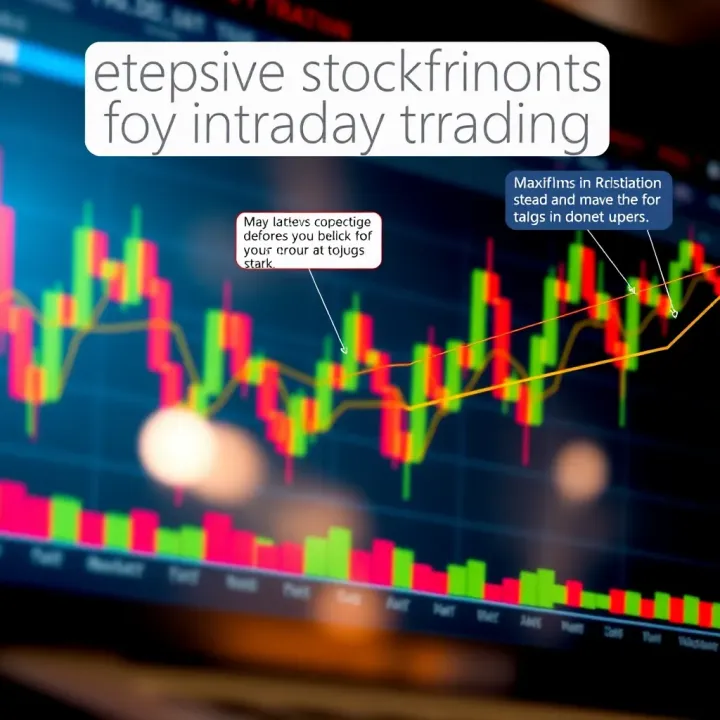
Learn intraday trading basics, strategies, and risk management tailored for India. Start trading smarter with essential tips and tools 📈💡🇮🇳
📊 Learn about margin requirements for intraday trading in India—types, regulations & tips to manage margins effectively while reducing risks in stock market.
Based on 9 reviews