
Best Trading Apps for Indian Investors in 2024
Discover the best trading app for Indian investors 📱 Explore top features like security 🔒, fees 💰, investment options 📈, and support to trade confidently!
Edited By
James Carter
Mobile trading apps have become the primary tool for many Indian investors looking to monitor and execute trades on the go. With the rise in smartphone penetration and fast internet, apps let you trade stocks, commodities, and even cryptocurrencies anytime, anywhere. But picking the right app isn't just about having a slick interface — factors like security, ease of use, charges, and access to data also make a big difference.
Whether you are a seasoned trader constantly scanning the NSE or BSE, or a newcomer trying to start with small investments through a Systematic Investment Plan (SIP), the best mobile trading app should suit your specific needs. The choice influences how quickly you can react to market movements, how much you pay per transaction, and how safely your data stays protected.
Selecting a trading app that balances usability and strong security features will help prevent losses from delayed trades or account breaches.
Indian investors face unique considerations. For example, apps integrated with Unified Payments Interface (UPI) enable hassle-free fund transfers for instant payments, while those supporting Aadhaar-based eKYC simplify account opening. Also, apps backed by top brokerages like Zerodha, ICICI Direct, and Angel Broking often provide robust support and educational resources tailored for Indian markets.
In this guide, we will walk you through the key features to check, including:
User interface and trading tools
Security measures like two-factor authentication and encryption
Charges, brokerage fees, and hidden costs
Access to research, charts, and market updates
Customer service quality
By weighing these factors, you can pinpoint trading apps that offer smooth, safe, and affordable investing experiences aligned to the Indian investor’s requirements. This will let you trade confidently, adapt to the markets faster, and make better-informed decisions on your mobile device.
When choosing a mobile trading app, the features it offers can make or break your trading experience. For Indian investors, where markets move fast and opportunities knock suddenly, an app must provide more than just basic tools. You need features that save time, reduce errors, and help you react quickly.
A simple, intuitive interface helps you focus on trading rather than figuring out the app itself. If your app has cluttered menus or confusing icons, you risk missing important trades or setting wrong orders. For example, the Zerodha Kite app scores high for clear charts and straightforward buy/sell buttons. Smooth navigation between charts, orders, and portfolio pages prevents frustration during busy market hours. Ultimately, good design lets you act immediately on insights, especially crucial during volatile conditions.
Market data delayed by even a few seconds could cost dearly. Real-time pricing, volume, and market depth updates let you track stock movements instantly. Also, custom alerts help monitor specific price points or news. Apps like Angel One send push notifications for sharp market moves or corporate announcements. This alert system means you won’t miss out on profit-making chances or need to constantly watch the screen.
A variety of order types — such as market, limit, stop-loss, and bracket orders — provide the flexibility critical to risk management. For instance, a stop-loss helps stop losses before they grow too big, while a bracket order bundles entry and exit targets automatically. Some apps also include advanced options like cover orders that protect margins. Having multiple trading options means you can handle different strategies, whether day trading or long-term investing.
Directly linking your trading app with your Demat and bank accounts streamlines fund transfers and settlements. This reduces manual work and avoids delays or errors in payments and share transfers. For example, apps offering UPI integration let you transfer funds instantly without hopping onto another app. Integration also ensures your portfolio reflects real holdings without the need to cross-check offline.
Ensuring these key features practically match your trading style can save you both time and money. Look beyond flashy apps and focus on tools that actually enhance your decision-making and execution.
Choosing an app involves balancing usability, speed, and flexibility. As you explore options, test these features hands-on to find the best fit for you.
Security is the backbone of any mobile trading app, especially in India where digital payments and investments are booming. A well-secured app not only protects your money but also safeguards your personal and financial data from cyber threats. Traders and investors must prioritise apps that employ strong security measures to avoid fraud, hacking, and unauthorised access.
Mobile trading apps should use end-to-end data encryption to keep your information safe while it moves between your device and the servers. Encryption scrambles data, making it unreadable to outsiders. For instance, popular apps like Zerodha Kite or Upstox Pro use TLS (Transport Layer Security) protocols to secure transactions. Secure login features like two-factor authentication (2FA) add a second layer of protection by requiring a one-time password (OTP) or biometric verification, such as fingerprint or facial recognition. This means even if your password is compromised, unauthorised access remains difficult.
Verify that the trading app complies with regulations set by SEBI (Securities and Exchange Board of India) and is registered with recognised financial institutions. Regulatory oversight ensures that apps maintain high security and operational standards. Certification from bodies like ISO (International Organization for Standardization) or PCI-DSS (Payment Card Industry Data Security Standard) further confirms that the app follows best security practices. For example, Angel One is known to maintain SEBI approval and incorporate strong compliance frameworks in place.

Good apps come with built-in risk management tools to help you control losses and protect investments. Features such as stop-loss orders, price alerts, and portfolio monitoring allow traders to limit downside risk automatically. Besides, risk warnings issued by the app based on market volatility or your trading behaviour can prevent impulsive decisions. These features empower Indian investors to manage their exposure smartly without constant manual oversight.
Choosing a mobile trading app with strong security measures protects you from cyber threats and financial losses, letting you trade with confidence on your mobile device.
By focusing on data encryption, regulatory compliance, and risk management features, you can narrow down the safest trading apps suitable for the Indian market. This vigilance itself goes a long way in maintaining a secure and smooth trading experience.
For Indian investors, understanding charges and brokerage models is key to choosing the right mobile trading app. These costs directly affect your overall returns and trading efficiency. Some apps offer attractive low brokerage, but hidden fees can quickly eat into your profits. So, knowing what you pay for and how charges are structured helps you avoid surprises and make cost-effective decisions.
One common distinction is between flat fee brokerage and percentage-based brokerage. Flat fee brokerage charges a fixed amount per trade regardless of the transaction size. For instance, Zerodha charges roughly ₹20 per trade, whether you buy stocks worth ₹10,000 or ₹1 lakh. This model is simple and favours high-value traders since costs don't increase proportionally.
In contrast, percentage-based brokerage depends on the trade size. Suppose an app charges 0.1% per transaction; a ₹50,000 trade means ₹50 brokerage, while ₹1 lakh trade costs ₹100. This model suits traders dealing with smaller volumes but can get costly for large transactions.
Deciding between these depends on your trading style and volumes. Day traders or frequent traders often prefer flat fees for predictability, while occasional investors might lean towards percentage-based models.
Besides brokerage, watch out for extra charges that apps might levy. These include:
Goods and Services Tax (GST): Applied on brokerage and other fees, typically 18%.
Securities Transaction Tax (STT): Applicable on equity delivery and intraday trades.
Stamp Duty: Charged by state governments; rates vary.
Transaction Charges: Levied by exchanges like NSE or BSE.
Account Maintenance Fees: Annual or monthly charges for maintaining your trading or demat accounts.
Call and Trade Fees: Some platforms charge extra if you place orders over the phone.
For example, Angel One charges ₹300 annually as a custodian fee, which can add up over years. These hidden charges often go unnoticed but impact your net gains significantly over time.
Always read the fine print of your chosen app's pricing structure to avoid unexpected deductions.
Cost-effectiveness isn't just about the cheapest brokerage. It includes considering the app's features plus overall charges. Zerodha Kite offers flat fees with minimal hidden costs, making it popular among active traders. Upstox Pro also has a similar flat fee model but includes periodic discounts during festive sales.
Angel One combines percentage brokerage with comprehensive services but may have higher account maintenance fees.
When comparing apps, consider:
Your trading frequency and volume – Higher volumes benefit from flat fees.
Types of trades – Intraday, delivery, futures, or options might have different rates.
Additional services – Research, advisory, or educational tools that add value.
Balancing these factors helps you pick an app that suits both your budget and trading needs efficiently.
Choosing the right mobile trading app is pivotal for Indian investors, as it affects how smoothly and safely they can execute trades, track portfolios, and react to market changes. Popular platforms often provide robust features tailored to the Indian market, including regulatory compliance with SEBI, integration with local banks, and access to multiple asset classes. Understanding the strengths of widely used apps helps investors match the platform to their trading style and goals.
Zerodha Kite is known for its clean and intuitive interface that appeals to both beginners and active traders. The app provides access to a wide range of market data, real-time charts, and indicators necessary for technical analysis. Its simple navigation ensures investors can place orders quickly without fumbling through complex menus, which is essential during fast-moving market conditions.
Zerodha follows a flat fee brokerage model: ₹20 per executed order for intraday and F&O trades regardless of trade size, and zero brokerage on equity delivery trades. This straightforward pricing suits both small and large traders by capping brokerage costs, making trading predictable and accessible. This fee structure is especially beneficial for traders dealing with large volumes or value but cautious about escalating brokerage charges.
Zerodha prioritises investor safety with features like two-factor authentication (2FA), end-to-end data encryption, and compliance with SEBI regulations. The app routinely updates security protocols, reducing risks of phishing or unauthorized access. For an investor, this builds confidence that their personal information and funds are well-protected.
Upstox Pro offers an advanced suite of trading tools, including customizable charts and multiple technical indicators, appealing to technically savvy investors. Its interface is designed to handle complex trading strategies, allowing users to execute varied order types with ease. The app’s capability to manage multiple asset classes efficiently makes it a good choice for diversified traders.
Upstox also works on a flat fee of ₹20 per order for intraday and F&O, with zero brokerage for equity delivery. Alongside this, it periodically offers EMI schemes for device purchases and trading packages that can reduce upfront costs. This model favours those who trade often and want a clear view of expenses beforehand.
Upstox provides timely customer support through chat, email, and call centres. Their dedicated team assists with account setup, technical issues, and trade-related queries. For new traders, this support reduces hesitation and helps resolve problems quickly, which is crucial during market volatility.
Angel One stands out for its comprehensive investment offerings, including equities, commodities, mutual funds, and even small savings schemes. This variety makes it suitable for investors looking to combine active trading with long-term investments within a single app.
The Angel One app is stable even during market surges. Its backend infrastructure supports smooth order processing without frequent crashes or lags, a key consideration for traders who cannot afford slowdowns during price swings.
Angel One goes beyond trading by offering financial advisory, personalised portfolio management, and research reports. These add-ons help investors make informed decisions, especially if they prefer guided investing rather than going it alone. The app also aligns with Aadhaar-based KYC processes, simplifying onboarding.
Selecting an app that fits your trading needs and style helps you trade confidently. Zerodha Kite, Upstox Pro, and Angel One each cater to different investor priorities, from pricing and tools to variety of investments and support.
By weighing these strengths, Indian investors can pick a mobile trading platform that matches their experience level and investment aims, ensuring smoother access to markets and greater control over their portfolios.
Starting with mobile trading can seem overwhelming, but having a clear plan eases the process and minimises risks. Indian investors need practical steps to set up and use trading apps effectively, especially since trading involves real money and market volatility.
Before you begin, open a trading account linked to a dematerialised (Demat) account. In India, several platforms like Zerodha, Upstox, and Angel One offer integrated solutions to simplify this. Make sure your bank and trade accounts are linked for smooth fund transfers through UPI or net banking. For example, linking your SBI account to your trading app allows you to deposit and withdraw funds without delays. Verification processes like Aadhaar and PAN linking are mandatory and help secure your account.
It's wise to start with small trades when exploring a new app. This lowers financial risk while you get comfortable with the interface, order placement, and other features. For instance, try buying just a few shares or investing in fractional equity on platforms where available. Testing also helps you understand order types—like limit orders versus market orders—and how quickly trades execute. Moving slowly can prevent costly mistakes and build confidence.
Staying aware of market movements is vital for timely decisions. Most apps offer live news feeds and alerts covering Nifty and Sensex movements, corporate announcements, and RBI policy updates. Besides in-app tools, use trusted sources like Economic Times and Moneycontrol. For example, following quarterly earnings reports of companies in your portfolio helps you decide whether to hold or sell. Regularly updating yourself reduces surprises and helps you spot opportunities or risks early.
Mobile trading is not just about executing orders; it's about informed decisions backed by timely information and sound account management.
By setting your accounts right, beginning cautiously, and keeping up with market news, you create a strong foundation for successful trading on your mobile device. These steps help you avoid common pitfalls and make trading a smoother experience aligned with your financial goals.
Discover the best trading app for Indian investors 📱 Explore top features like security 🔒, fees 💰, investment options 📈, and support to trade confidently!
Explore features, security, and tips of online trading apps tailored for Indian investors 📱📈. Make safer, smarter investment choices today!
Explore the best trading apps in India 📱 Compare features, security 🔒 user experience, and find the right platform tailored to your trading style and goals 📊
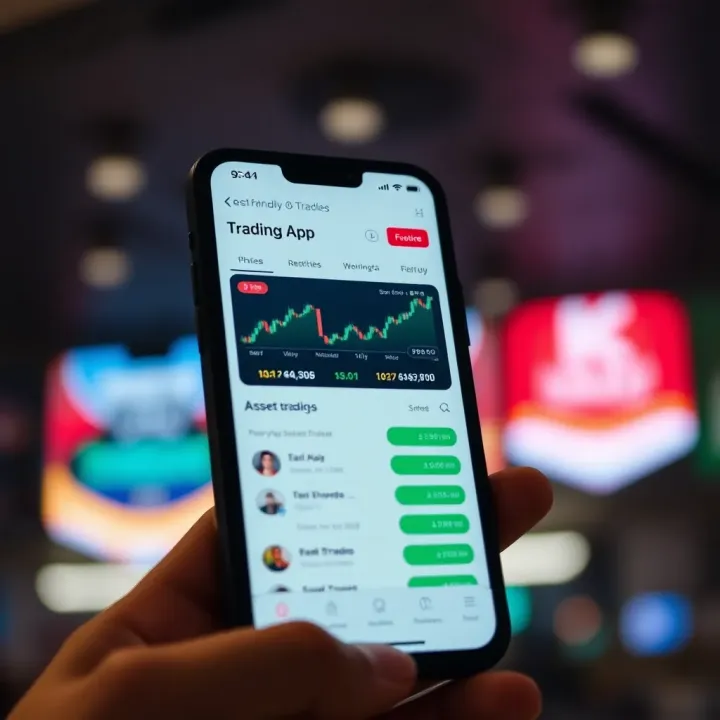
🔍 Find the best trading app in India with our detailed guide! Explore top features, security, fees, and assets to trade confidently and safely. 📈💼
Based on 9 reviews