

Understanding Binary Trees in Data Structures
Explore the structure and varieties of binary trees 🌳 in data structures. Learn traversal methods, operations, and when to choose them over other tree types for better performance.
Edited By
Henry Lawson
Binary trees form a backbone of many computing tasks, especially in fields that demand structured data organisation and quick search algorithms. At their core, binary trees are hierarchical data structures where each node holds a value and points to up to two child nodes, often named left and right. This simplicity conceals their power in managing data efficiently.
Unlike simple lists or arrays, binary trees allow operations like search, insertion, and deletion to run faster in many scenarios. Traders and investors often encounter algorithms that rely on binary tree structures for real-time data sorting or decision-making tools. For instance, a binary search tree (BST) arranges data so that left descendants are smaller and right are larger, helping in rapid price lookups or risk calculations.

Key properties define binary trees:
Each node can have zero, one, or two child nodes.
The top node is the root, from which all branches emerge.
Nodes without children are called leaves.
Operations on binary trees commonly include traversals like inorder, preorder, and postorder. These methods systematically visit nodes to process or retrieve data in a particular sequence. For example, inorder traversal of a BST produces data sorted in ascending order, a handy feature for sorting price points or transaction records.
Moreover, binary trees underpin more complex structures like heaps and segment trees, which find use in priority queues or interval queries—tools relevant to financial algorithms monitoring stock trends.
Binary trees are not just academic constructs; they serve practical applications in programming tasks where quick, organised data access impacts decision speed—critical in trading and investment analysis.
To put it simply, grasping binary trees equips you with a mental model to understand underlying data mechanisms behind many financial software tools. Later sections will explore specific types like AVL trees, operations like insertion, and real-world applications tailored for those handling stock or cryptocurrency data.
Understanding these fundamentals will give you a clearer advantage when navigating automated systems or building your own algorithms.
Understanding binary trees is foundational for anyone analysing data structures with an eye on efficiency and organisation, especially in areas like algorithm design or software development. Binary trees offer a method to organise data in a hierarchical fashion, enabling quicker searching, insertion, and deletion operations compared to simple lists or arrays. For example, a trader interested in optimising stock data searches could implement binary trees to minimise lookup times.
A binary tree is a data structure where each element, called a node, has at most two children, typically called the left and right child. This simple structure forms the backbone of many advanced data frameworks in computing. Practically, such a structure allows for efficient splitting of data sets—for instance, a binary search tree arranges stock prices so you can quickly narrow down where a particular price might appear.
Every binary tree starts with a root node, from which all other nodes descend. Nodes without children are known as leaf nodes. Understanding these terms helps in grasping how traversals or searches work in a tree. For instance, in a portfolio management system, the root could represent the main portfolio category, and leaf nodes might represent individual assets.
Height refers to the longest path from the root to a leaf, while depth measures the distance from the root down to a particular node. These properties directly impact performance—for instance, deeper trees often mean slower search times. A balance between height and node distribution is critical for efficiency.
Size is the total number of nodes, whereas levels represent the different layers in the tree, starting from 0 at the root. Knowing these helps in understanding how data is spread out. For example, in market analysis, each level might represent a different granularity of data, such as daily prices on level one and minute-by-minute prices deeper down.
A binary tree's maximum nodes at a level follow the formula 2^level, with minimum nodes being 1 at the root. Practically, this sets bounds on how large or small your tree can grow at each stage, guiding resource allocation in applications handling large volumes of financial data.
Grasping these foundational elements prepares you for more complex structures and operations, helping you leverage binary trees effectively in algorithmic trading or data analysis.
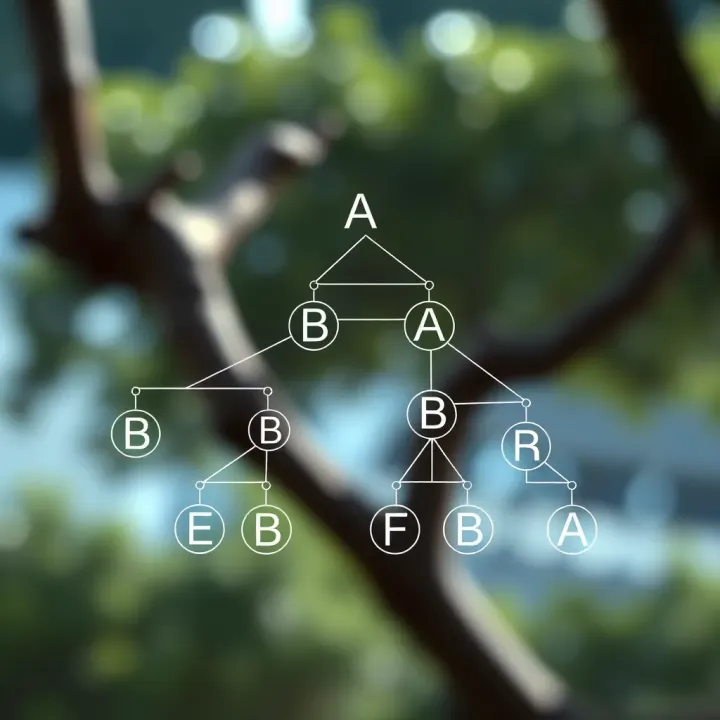
Understanding different types of binary trees is key to utilising them efficiently in computer science and financial computing. Each variant offers unique structural characteristics, which in turn affect performance and functionality in applications like searching, sorting, and data organisation. Traders and data analysts who rely on fast data retrieval will find particular value in grasping these concepts to optimise algorithmic trading systems and market data analysis.
A full binary tree is one where every node has either zero or two children. This rigid structure ensures no nodes are left hanging with a single child, which simplifies many algorithms. For example, in a full binary tree of depth 3, all nodes at the second level have exactly two children, supporting balanced data storage.
Meanwhile, a complete binary tree fills all levels completely except possibly the last, where nodes are added from left to right. This arrangement is especially useful in heap implementations, frequently seen in priority queues used by financial services for efficient data processing.
A perfect binary tree is the strictest form where all internal nodes have two children, and all leaves appear at the same depth. This structure offers the fastest possible search times due to uniform depth but is challenging to maintain dynamically.
A balanced binary tree relaxes the perfect condition but keeps the height difference between left and right subtrees minimal, usually one or less. Balanced trees like AVL or Red-Black Trees maintain this property through rotations, ensuring operations such as insertion, deletion, and search remain efficient even as data grows or changes. This balance avoids worst-case scenarios that plague unbalanced trees.
Binary Search Trees (BST) organise data to speed up searching, insertion, and deletion operations. In a BST, each node’s left subtree contains values less than the node’s value, and the right subtree has values greater. This property vastly reduces search times compared to linear data structures, making BSTs essential in trading platforms where timely data retrieval is vital.
The efficiency of BSTs can mean the difference between real-time trading decisions and delayed responses, impacting profitability directly.
Search operations in BSTs typically execute in time proportional to the height of the tree. In balanced BSTs, this height stays around log₂(n), making searches much faster than linear scans. For instance, searching for a stock symbol in a well-balanced BST with 1,00,000 entries takes roughly 17 steps rather than tens of thousands.
However, unbalanced BSTs can degenerate into linear lists causing search times to rise to O(n). Hence, keeping trees balanced is crucial for predictable performance.
Besides search, BSTs support straightforward insertion and deletion. Insertion places new data maintaining the BST property, allowing dynamic updates essential in live trading environments. Deletion can be trickier, especially when removing nodes with two children; algorithms reorder nodes while preserving the tree's structure.
Practical implementations of BSTs often include self-balancing mechanisms to sustain performance, making them apt for financial databases where frequent modifications occur alongside searches.
These types form the backbone for many data structures utilised in financial technologies, so understanding their properties helps in designing responsive and reliable systems.
Core operations on binary trees form the backbone of effectively managing and utilising this data structure. These operations allow programmers and analysts—whether in software development or financial modelling—to traverse, modify, and search trees efficiently. Understanding how to navigate and update binary trees is particularly useful when implementing algorithms for quick data retrieval, hierarchy management, or even parsing complex expressions within trading systems or data analytics tools.
Traversal means visiting all the nodes in a binary tree systematically. Different traversal methods reveal data structured in unique orders, each serving specific use cases.
In-order Traversal involves visiting the left subtree first, then the node itself, and finally the right subtree. This traversal is especially useful when dealing with binary search trees (BSTs), as it extracts node values in ascending order. For instance, imagine a BST storing transaction amounts in a portfolio; in-order traversal helps list these amounts from smallest to largest, aiding in quick analysis and comparisons.
Pre-order Traversal visits the node before its subtrees—node, then left, then right. This approach is handy for copying a tree or reconstructing it from traversal logs. In financial software, pre-order traversal might be used to save the entire decision tree of investment options, helping in recreating analysis steps without ambiguity.
Post-order Traversal visits the left and right subtrees before the node itself. This sequence suits scenarios where processing children first is logical, such as calculating total portfolio risk by aggregating risk scores from all assets before evaluating the parent node. Post-order traversal supports tasks like deleting nodes safely or evaluating expression trees representing complex financial formulas.
Level-order Traversal explores nodes level by level from root to leaves. This breadth-first approach is practical for applications that require hierarchical processing, such as managing levels of permissions in a trading platform or displaying stock market data by sectors and sub-sectors. It helps in visualisations where breadth matters more than depth.
Adding or removing nodes from a binary tree requires careful handling to maintain its properties. Insertion often follows traversal methods to find the proper position, especially in BSTs, where the new value must respect the order. Deletion can be tricky; removing a node with two children demands replacing it with either its in-order predecessor or successor to keep the tree intact. Traders using tree structures for portfolio management need precise insertion and deletion routines to reflect real-time changes in holdings or instrument availability.
Searching is fundamental, especially in BSTs where the value determines the path. It offers faster lookups than linear searches—typically O(log n) time for balanced trees—making it ideal for querying large datasets like stock prices or cryptocurrency transactions. Non-BST binary trees require exhaustive search methods, but systematic traversal ensures every node is checked without missing potential matches.
Efficient operations on binary trees not only speed up data handling but also help maintain organised structures essential for complex, dynamic environments like financial analytics.
Binary trees play a key role in various computing tasks, helping organise data efficiently and speed up processing. Their structure allows quick access, modification, and storage, which is vital for technologies trading and financial analysis systems rely on daily.
Binary trees help store data in a way that supports fast search and sorting. For example, binary search trees (BSTs) keep elements in order, which makes retrieving stock prices or transaction records swift. When dealing with thousands of trade entries, BSTs reduce the time it takes to find a particular record compared to using simple lists. Additionally, self-balancing trees like AVL or Red-Black Trees keep the data sorted even as updates occur frequently during market hours, ensuring consistent performance.
In computing, binary trees are useful for parsing mathematical expressions or financial formulas. Consider a trader calculating profit and loss based on complex conditions—expression trees can represent and evaluate these formulas efficiently. Each node holds an operator (like + or –), and the leaves represent values or variables. This structure simplifies computing results dynamically, a necessity when algorithmic trading systems automatically execute decisions based on live data.
Many databases and file systems depend on binary trees to manage storage and retrieval. B-Trees (a variation of binary trees) organise large blocks of data efficiently, which helps database queries run faster. For instance, when analysing historical stock data stored in massive databases, these tree structures quicken data lookup without exhausting system resources. On the file system side, directory management often uses trees, enabling quick navigation through nested folders where documents and trading reports might be saved.
Binary trees combine simplicity with powerful data handling, making them indispensable in computing fields demanding quick, accurate, and large-scale data operations.
In short, binary trees underpin many behind-the-scenes operations in finance and technology. Whether it's sorting market data, parsing formulae for risk calculations, or managing vast databases, their applications improve speed and reliability essential for traders and analysts.
Wrapping up, a summary serves as a quick refresher of the essential ideas about binary trees. It helps consolidate your understanding of the structure, key types, standard operations, and uses in computer science. For example, revisiting how binary search trees improve search efficiency can reinforce why they matter in database indexing or trading algorithms.
The further reading section guides those who want to dive deeper. It suggests reliable resources where you can explore advanced topics, algorithms, or applications beyond this overview. This is particularly useful in fields like algorithmic trading or crypto analysis, where optimised data structures affect performance.
Binary trees consist of nodes, each with up to two children, usually called left and right. Their structure supports organised data storage and quick retrieval. We discussed common types such as full, complete, perfect, balanced, and binary search trees, each with specific properties suited for different tasks. Traversal methods like in-order and level-order enable systematic visiting of nodes, critical for tasks like expression parsing or sorting.
Insertion and deletion in these trees maintain their shape and efficiency, a must in dynamic datasets like stock price changes or live transaction records. Binary search trees stand out by reducing search times to logarithmic scale under favourable conditions, a practical gain for financial data management.
To better grasp binary trees, books like "Introduction to Algorithms" by Cormen et al offer rigorous explanations and examples. For coding practice, platforms such as GeeksforGeeks and HackerRank provide binary tree problems suitable for sharpening your skills.
For applications within financial tech or data science, resources focusing on data structures and algorithm implementations in Python or Java give context-specific insights. Indian tech communities and coding bootcamps also share interesting case studies showing how binary trees manage large volumes of trading data or blockchain transaction records.
A good grasp of binary trees lays the foundation for efficient algorithm design and faster data handling, crucial in today’s data-driven financial markets.
Overall, summarising and pointing towards further readings enable you not only to reinforce what you've learned but also to take your understanding to the next level, whether for academic growth or practical trading algorithms.
Explore the structure and varieties of binary trees 🌳 in data structures. Learn traversal methods, operations, and when to choose them over other tree types for better performance.

💻 Understand binary numbers, how they work, convert between binary & decimal, and explore their practical use in computing and programming today! 🔢

🔢 Explore binary translators: understand how they convert binary code into readable formats. Learn their uses in computing and education, tools available, and manual conversion tips.

🌳 Explore binary trees in design and analysis of algorithms, covering types, properties, operations, traversal methods, and their role in efficient data organisation.📊
Based on 15 reviews