
Understanding Binary Numbers and Their Uses
💻 Understand binary numbers, how they work, convert between binary & decimal, and explore their practical use in computing and programming today! 🔢
Edited By
William Evans
Binary language forms the backbone of digital communication, powering everything from stock trading platforms to cryptocurrency exchanges you use daily. At its core, binary relies on just two symbols: zero (0) and one (1). These seemingly simple digits allow computers to represent and process complex information by translating everything into combinations of 0s and 1s.
Each binary digit, or bit, stands for a state—either off (0) or on (1). When combined in sequences, bits can encode numbers, text, images, or even audio. For example, in stock market data feeds, trade information is converted into binary so servers can quickly process and share transactions within milliseconds.
Why binary? The advantage lies in its reliability. Electronic circuits easily differentiate between two voltage levels, corresponding to 0 and 1, minimising errors even during high-speed trading or crypto mining. Imagine reading Indian stock prices during volatile market swings—the system’s binary foundation ensures data remains consistent.
Understanding binary is also essential for grasping modern encryption methods securing your cryptocurrency wallets or NSE-backed trading apps. These digital assets rely on binary-based algorithms to protect transaction details and user identities.
Binary language enables digital systems in India and worldwide to function efficiently, turning complex real-world information into manageable, smaller, and faster signals.
To sum up, binary acts as the fundamental translator between human concepts—like numbers, letters, or market data—and the machine code computers understand. As you trade or invest, every decision you make depends on this invisible layer that converts information into 0s and 1s, delivering the speed and accuracy essential in financial markets.
Understanding the basics of binary language is key to grasping how all digital communication operates. Binary language is the foundation of every bit of data your computer, mobile, or trading platform processes. Breaking down this language helps traders, investors, and analysts appreciate how massive amounts of information get translated into the digital signals that power stock exchanges, cryptocurrency transactions, and real-time market data.
Binary language uses just two symbols, typically 0 and 1, to represent information. These are not just numbers but signals — low and high, off and on — which digital devices interpret. Think of it as a simple switch that’s either flipped up (1) or down (0). Every instruction or piece of data on your computer reduces to these tiny building blocks called bits.
Using two symbols simplifies the design of hardware and improves reliability. Instead of decoding complex signals that might cause errors, devices can distinguish clearly between two states like voltage high or low. This binary approach makes computers robust against noise and fluctuations, which is especially crucial in trading systems where milliseconds matter and errors can cost crores.
A bit is the smallest unit of data, but single bits alone aren’t that useful. Eight bits joined together form a byte, which can represent 256 different values (from 0 to 255). Bytes are the real workhorses—they store letters, numbers, colours, or even instructions. For example, an ASCII character like letter 'A' is stored as the byte 01000001 in binary.
Numbers in decimal (base 10) are converted to binary (base 2) by repeatedly dividing by two and noting the remainders. For instance, the number 13 converts to 1101 in binary. This conversion is essential for computers because all calculations and data storage happen in binary form, even when you see numbers on your screen.
Text and instructions for the computer are encoded into binary so processors can understand and execute them. Each character in text has a binary code, like Unicode or ASCII. Similarly, instructions in software are converted into machine code—a sequence of binary commands that dictate the computer's actions, such as adding numbers or sending data over the internet.

Take the word "BUY" as an example. In ASCII, 'B' is 01000010, 'U' is 01010101, and 'Y' is 01011001. When a trading platform reads this in binary, it recognizes these sequences as the letters to display or process. Likewise, a buy order in a stock market platform may be represented internally with a series of binary instructions that ensure swift execution.
Grasping these basics demystifies how digital systems transform everyday commands and data into a language computers understand instantly. For those actively trading or analysing markets, knowing binary’s role underscores the seamless speed and reliability of modern electronic trading platforms.
Understanding the historical development of binary systems shows how digital communication evolved from simple concepts to complex computing technologies. It highlights the practical benefits of using binary language today, especially in trading software, financial algorithms, and cryptocurrency platforms.
Binary-like systems date back centuries; early cultures used them in practical ways. For example, the ancient Chinese developed the I Ching, a set of symbols based on dual states resembling binary patterns. These early systems showed that representing complex ideas with simple dual markers could be efficient and reliable.
Gottfried Wilhelm Leibniz, a German mathematician and philosopher in the 17th century, made significant advances by formalising binary number usage. He demonstrated that all numbers and even logical statements could be represented using only zeroes and ones. This insight laid the groundwork for the binary system’s practical application in computing, influencing how we process and store information digitally today.
Binary language deeply connects to logic and mathematics. It forms the backbone of Boolean algebra, which uses true/false values represented by 1s and 0s to make decisions. This logic guides computational thinking, from simple programming conditions to complex algorithmic trading models. Today’s computers rely on this logical structure to execute instructions efficiently.
Early computers initially used decimal systems, but they soon shifted to binary for greater reliability and simplicity in hardware design. Decimal-based circuits were complex and prone to errors, while binary allowed electric circuits to switch between two clear states: on and off. This change was crucial for developing cost-effective, faster computing devices vital for financial data analysis and stock market simulations.
In the microprocessor era, binary became central to all digital devices. Microprocessors interpret instructions in binary form, controlling everything from smartphones to ATMs. This universality means that innovations in binary processing directly affect Indian fintech, cryptocurrency networks, and stock exchange platforms, ensuring speed and accuracy.
Today, binary’s influence extends across modern computing technologies. Cloud computing, blockchain, and artificial intelligence systems process data in binary at the lowest level. This fundamental role helps optimise performance and security, critical for managing sensitive financial transactions and analysing market trends.
The journey from ancient dual systems to modern binary computing underscores how simple concepts enable powerful digital tools that drive India’s financial and tech industries.
Key historical insights:
Ancient dual states simplified complex information
Leibniz's formalisation connected numbers with logic
Shift from decimal to binary boosted computer reliability
Binary logic powers modern processors and fintech solutions
Such understanding can help investors, traders, and analysts appreciate the technology behind their tools and the digital transformation shaping financial markets.
Binary language relies on simple yet powerful technical principles that enable every digital device to function accurately and efficiently. Understanding these principles gives you insight into how computers perform calculations, store information, and communicate data. This section highlights the critical areas of binary arithmetic, logic operations, data storage, and transmission, focusing on their real-world applications.
At its core, binary arithmetic works similarly to decimal arithmetic but uses only two digits: 0 and 1. The basic operations—addition, subtraction, multiplication, and division—are performed on these binary digits (bits). For example, adding 1 + 1 in binary results in 10, which corresponds to 2 in decimal. This simplicity lets processors perform complex calculations by combining these tiny units. Traders using algorithmic trading platforms unknowingly rely on such operations happening in fractions of a second to execute trades accurately.
Logical gates form the backbone of binary logic. These electronic circuits perform fundamental operations like AND, OR, and NOT, which manipulate bits to deliver specific outcomes. For instance, an AND gate outputs 1 only if both inputs are 1. This mechanism is crucial in decision-making processes inside a computer’s CPU (central processing unit). Financial analysts familiar with automated risk assessment tools are indirectly dependent on these logic gates to evaluate conditions and trigger actions.
Binary logic controls every computer process by enabling machines to make decisions based on yes/no conditions. For instance, a simple binary condition can tell whether a user’s password matches the stored one. This decision-making process extends to running software, managing memory, or interacting with hardware devices. Essentially, binary logic acts as a switchboard, directing where the system should venture next based on the data it processes.
Data in computers is stored as strings of 0s and 1s in memory chips like RAM or hard drives. Each bit represents a tiny piece of information, and combined bits form characters, numbers, images, or instructions. In the Indian stock market, for example, financial data stored digitally depends on such memory structures to ensure quick access and processing.
Binary also plays a vital role in data communication protocols. When you check stock price updates on your mobile app, data packets travel through networks following strict binary communication protocols. These protocols ensure packets arrive correctly and in order by using binary codes to identify addresses and manage transmissions.
Error detection and correction techniques help maintain data integrity during storage and transmission. Methods like parity bits or cyclic redundancy checks (CRC) identify errors caused by noise or interference and correct them before data reaches the user. For instance, in online banking or cryptocurrency transactions, these techniques safeguard against data corruption that might lead to financial losses.
Understanding these technical principles reveals how reliable and fast digital communication depends on binary language behind the scenes. This knowledge becomes particularly useful when evaluating or investing in tech stocks or cryptocurrencies that leverage binary-driven systems.
Binary arithmetic simplifies complex calculations using only 0 and 1.
Logical gates perform essential decision-making inside processors.
Binary logic directs computer operations through yes/no conditions.
Data storage and transmission rely heavily on binary sequences.
Error detection and correction ensure data reliability.
Grasping these concepts will help you appreciate the foundational technology powering modern digital finance and communication.
Binary language forms the backbone of most digital devices we use every day. It turns complex digital tasks into simple two-state (0 and 1) operations, making computing efficient and reliable. Understanding how binary applies in real-world technologies sheds light on everything from the mobile in your pocket to the software running global stock exchanges.
Mobiles rely heavily on binary signals to operate. Every touch, call, or app action gets broken down into binary code, which the phone's processor interprets to perform specific tasks. For example, when you type a message, each character converts into a binary number that the device understands, sends, and stores. This binary handling enables everything from voice calls over cellular networks to running apps smoothly on smartphones.
Digital media like photos, videos, and music are stored and managed using binary code. File formats such as JPEG or MP4 encode visual and audio information into binary sequences so devices can store vast amounts of data compactly and retrieve it precisely. For instance, streaming a video on your mobile involves decoding binary packets sent over the internet, ensuring playback happens without glitches.
Networking and internet technologies depend entirely on binary communication. Data sent through the internet, whether it is a financial transaction or a cryptocurrency trade, travels as packets of binary signals. Protocols like TCP/IP govern how these packets transmit, ensuring secure and reliable exchanges between servers and devices. In trading platforms, fast and accurate binary data transmission is what enables real-time stock price updates and order processing.
At the most fundamental level, machine language and assembly code use binary instructions that microprocessors execute directly. Assembly language offers a human-readable form of these instructions but ultimately translates into binary for the hardware. This close-to-hardware programming is crucial for creating high-performance trading algorithms and financial software that demand speed and accuracy.
Higher-level programming languages, like Python or Java, get translated into binary through compilation or interpretation. This translation step is essential for your software to run on computers or mobile devices. Consider a financial analyst running a Python script to backtest investment strategies: the underlying binary conversion ensures the computer correctly executes those commands.
Binary also plays a vital role in debugging and optimisation. Developers often inspect binary code to identify bugs or inefficiencies not visible at higher code levels. For example, tweaking binary instructions can reduce the latency of execution, a critical factor in algorithmic trading where milliseconds count. Understanding binary helps programmers ensure their software utilises hardware capabilities fully and runs efficiently.
Binary language may seem simple with just zeros and ones, but its practical applications support the complex digital world behind financial markets, internet connectivity, and daily communications.
In sum, from mobiles and digital media to software powering stock exchanges, binary language is the silent force driving modern technologies. Knowing its applications helps investors and traders appreciate the stability and speed beneath their digital tools.
💻 Understand binary numbers, how they work, convert between binary & decimal, and explore their practical use in computing and programming today! 🔢
Explore how binary numbers work, with clear steps for decimal-binary conversion, arithmetic basics, and their role in computing 💻 and electronics ⚙️.
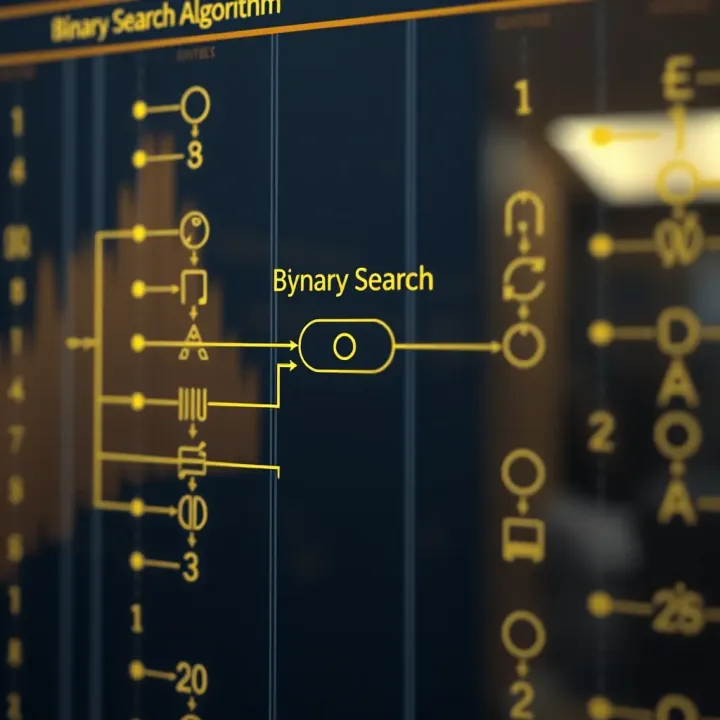
🔍 Explore how the optimal binary search technique improves search efficiency, solves common challenges, and offers practical tips for better algorithm performance.
Explore how octal to binary encoders simplify digital circuits 🔢. Learn their role, truth table, and see practical examples for clear understanding.
Based on 11 reviews