

Understanding the Left View of a Binary Tree
🌳 Explore the left view of a binary tree, learn methods to find it, understand challenges, and see real-world uses in tree data structures.
Edited By
Sophie Clarke
In computer science, understanding different views of a binary tree helps in visualising and analysing data structures effectively. The top view represents how a binary tree appears when observed directly from above. Instead of considering the entire structure with all nodes, it focuses on those nodes that remain visible from the very top.
The top view essentially includes the nodes at the highest level across vertical lines passing through the tree. Imagine looking down from the sky; some nodes might be hidden behind others, but the ones at the first level in each vertical path will be in sight.
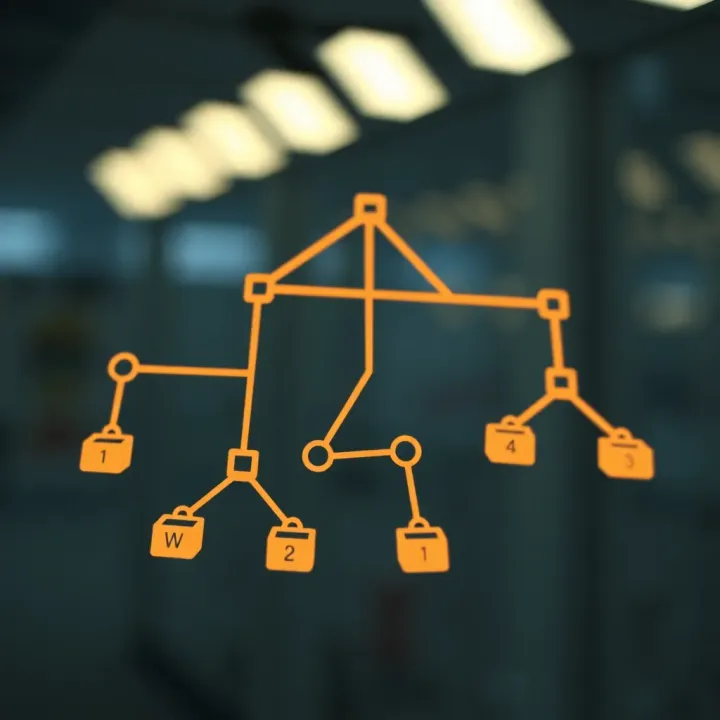
This perspective can assist traders, investors, and financial analysts when handling hierarchical data—like tracking corporate structures, decision trees, or transaction flows. Visualising relevant nodes only avoids clutter and highlights critical points.
To clarify, here’s what the top view tells you:
Visibility Based on Horizontal Distance: Nodes are grouped by their horizontal distance from the root. Each vertical line from left to right contributes the top node visible at that line.
Level Priority: If multiple nodes share the same vertical line, only the node closest to the root (lowest depth) is considered.
Excludes Hidden Nodes: Nodes blocked by others from the top perspective don’t appear in the top view.
Consider a binary tree representing trading strategies. Looking at its top view reveals primary strategy nodes the trader should focus on without distracting details buried in lower levels.
The top view simplifies complex tree structures, allowing you to capture the outline of essential nodes in a concise, accessible way.
Visualising the top view can also enhance algorithms in areas like financial forecasting models or hierarchical decision-making processes by reducing data overhead and improving clarity.
Next, we'll explore how to calculate the top view using practical techniques and examples that you can apply directly in coding or analysis workflows.
Understanding binary trees is essential for anyone working in computing or finance fields that involve hierarchical data processing. Binary trees organise data in a parent-child structure, which makes searching, sorting, and managing information efficient. When visualising these trees, different views offer unique insights, especially when debugging or analysing complex datasets like stock market trends modelled in tree formats.
A binary tree is a data structure consisting of nodes, where each node has at most two children known as the left and right child. This simple yet powerful structure supports efficient operations such as insertion, deletion, and traversal. The binary tree’s recursive nature makes it particularly useful in scenarios like parsing expressions or managing hierarchical portfolios.
Each node holds data, while the edges represent connections between parent and children. The position of each node defines its level, starting from the root at level zero. The level information helps in understanding the depth and spread of the tree. For example, in algorithmic trading, the levels can correspond to decision points across various market conditions.
These are fundamental techniques to visit all nodes in a binary tree. Inorder traversal visits nodes from left child, root, then right child, which is useful for retrieving data in sorted order—a handy feature for arranging financial records. Preorder processes the root before its children, helpful for copying trees, while postorder visits children first, suitable for deleting or freeing resources efficiently.
Vertical view slices the tree along vertical lines, picking nodes visible in each column. This helps in depth analysis, like segmenting market data based on different criteria. Horizontal view, on the other hand, looks along horizontal levels—useful for understanding the breadth of influences at a particular stage.
The top view shows nodes visible when looking from above the tree, representing the nodes with the smallest vertical distance at each horizontal position. This helps in understanding the most dominant elements along the breadth, like the highest-priority trades or critical decisions in an investment tree. The bottom view reveals nodes visible from below, giving a different perspective on the tree’s spread. These views assist developers and analysts in panoramic visualisation of complex hierarchies.
Grasping these fundamental elements prepares you to work with more complex tree operations and visualisations, especially the top view, which highlights the primary nodes across the structure.
This knowledge provides a strong base for traders and analysts who deal with data structures representing their strategies or market information dynamically.
Concept of visibility from above: The top view essentially captures all nodes not blocked by any other nodes when the tree is viewed from the top. Imagine looking down on a family tree or an organisational chart laid flat; the nodes that stand out without overlap form the top view. This helps in understanding the highest-level structure, revealing the nodes that govern or influence the tree's layout most visibly.

Difference from other views: Unlike inorder or preorder traversals that focus on the depth-first visiting sequence, or vertical views which group nodes arranged along the same vertical lines, the top view filters nodes by horizontal distance and height, prioritising those closest to the viewer from above. This means nodes hidden deeper but vertically aligned are left out. For example, in stock market models using tree data structures, the top view can display the first visible decision points without crowding from deeper branches, aiding quicker assessment.
Tree visualization and debugging: Developers often use the top view to simplify complex tree structures during debugging. By limiting visual clutter, it becomes easier to spot anomalies or verify the correctness of tree transformations. For instance, when working with syntax trees in compiler design, the top view can show overarching elements quickly, allowing for focused troubleshooting.
Use cases in network routing and GIS: The top view finds practical use beyond programming. In network routing, this view helps determine main nodes visible from a central control point, improving routing efficiency by focusing on key connections. Similarly, Geographic Information Systems (GIS) can use top views of data trees to represent terrains or urban layouts at a glance, assisting planners and analysts in decision-making by highlighting dominant features.
The top view offers a simplified, yet highly informative perspective that cuts through complexity, making it invaluable in fields where layered hierarchical data is common.
This section underscores why defining the top view matters, setting the stage for techniques to identify it accurately in subsequent parts.
Determining the top view of a binary tree hinges on understanding node positions and how they align when viewed from above. This involves assigning and tracking horizontal distances to each node and carefully selecting which nodes become visible at each horizontal level. Precise techniques help in capturing the top-most nodes, crucial for applications like optimising network layouts or visual debugging.
Assigning horizontal distances to nodes means giving a numerical value to each node's position relative to the root. The root is assigned a horizontal distance (HD) of zero. For its left child, the HD is one less (HD - 1), while the right child's HD is one more (HD + 1). This simple approach lays a clear spatial foundation to identify which nodes align vertically from a top view.
Tracking nodes by horizontal distance then involves keeping record of the nodes encountered at each HD during traversal. Since several nodes can share the same HD but be at different levels vertically, the top view captures only the first node visible at each HD—the one with the smallest depth level. For example, in a scenario where two nodes are at the same horizontal distance but one is deeper in the tree, only the shallow one is part of the top view.
The level order traversal approach proves highly effective here. This method visits all nodes at each level from left to right, ensuring nodes closer to the root get priority in visibility. By progressing level-wise, it naturally supports identifying the top node at each horizontal distance before encountering nodes at deeper levels.
Using maps or dictionaries to store nodes keyed by their horizontal distances simplifies visibility tracking. As the traversal progresses, the algorithm updates the map only if a node appears at a horizontal distance not recorded before. This technique enables quick lookups and efficient resolution of which nodes form the top view without rescanning the entire tree multiple times.
Dealing with overlapping nodes—nodes that share the same horizontal distance and level but are part of different branches—requires a fixed rule to decide visibility. Typically, the node that appears first during level order traversal (usually the leftmost) is considered visible. This approach maintains consistency and avoids ambiguity in the top view output.
Trees with only left or right children represent a straightforward case for top view calculation. Since these degenerate trees are essentially single paths, all nodes align along a descending or ascending horizontal distance without overlap. This simplicity makes the top view identical to the in-order listing of those nodes but remains important to validate the traversal algorithm handles such extremes correctly.
Understanding these techniques not only clarifies the concept of the top view but also helps implement efficient algorithms that deal effectively with tree structures encountered in the real world.
This knowledge forms the backbone for programming tree visualisation or solving routing problems where hierarchy and horizontal alignment matter.
Examples and practical implementation are vital to grasping the top view of a binary tree effectively. Visualising the process with real trees helps clarify abstract concepts like horizontal distances and visibility. This is especially useful for traders and financial analysts who work with complex data structures in algorithmic trading or data modelling, as it makes the theoretical ideas easier to relate to practical coding tasks or problem solving.
By walking through concrete examples, readers can see how nodes are assigned horizontal distances and how the top view emerges from these calculations. Implementing the approach in code further bridges theory and practice, ensuring that the concepts are not just memorised but actively understood.
Consider a simple binary tree used in portfolio risk assessment models, where the root node represents a primary asset, and left and right children denote correlated assets and derivatives. Visualising such a tree helps traders understand dependencies. This practical sample tree might have depth 3 or 4, enough to show overlaps or nodes hidden from the top view.
Using such an example allows you to see the spatial relations clearly. It serves as a foundation to assign horizontal distances and levels in the next step.
Each node receives a horizontal distance (HD) value based on its position relative to the root. For example, the root node has HD 0, its left child HD -1, and right child HD +1. Levels denote the vertical layers, starting from 0 at the root and increasing downward. This combination guides which nodes remain visible in the top view.
Assigning HD and levels in a real example uncovers overlaps where multiple nodes share the same HD but differ in depth. The node with the smallest level (highest in the tree) at each HD becomes visible from the top.
After tracking nodes by HD and level, the visible nodes form the top view. Listing them in order of increasing HD from leftmost to rightmost creates a clear horizontal representation. This layout aids in debugging binary tree structures in financial algorithms or visualising network routing paths.
For example, in the sample tree, suppose nodes at HDs -2, -1, 0, 1, and 2 appear—only those with the smallest levels count, giving an accurate top view for analysis.
Code examples, such as in Python or Java, allow you to implement the top view algorithm easily. Python with its dictionary and queue data structures suits well for level order traversal combined with HD tracking. Java offers robust tree node classes and map collections, making the concept approachable for developers and analysts.
These snippets are invaluable for traders interested in algorithmic strategies that manipulate tree data or in automating complex data visualisations.
The algorithm typically uses level order traversal (BFS) to visit nodes, while recording HDs in a map or dictionary. Each HD stores the first node encountered at that horizontal distance. This first-come-first-served logic ensures only the topmost nodes are kept.
The time complexity generally stands near O(n), with n being the number of nodes, as each node is visited once. Space complexity depends on the breadth of the tree—related to the maximum number of nodes at any level—but remains manageable for most real-world scenarios.
Understanding these details equips you to optimise code for large datasets, such as huge decision trees used in financial risk management or predictive analytics.
Practical examples and sample code make the concept of a binary tree's top view less abstract and more usable in fields where data structures underpin decision-making and automation.
This section wraps up the key concepts about the top view of a binary tree by highlighting crucial points and suggesting materials for deeper learning. It helps consolidate what you have read and guides you towards expanding your knowledge. For developers and traders dealing with complex data structures, revisiting these essentials ensures better understanding and practical use of tree views.
Horizontal distance plays a central role in identifying the top view of a binary tree. Without assigning a horizontal distance to each node, it is impossible to determine which nodes are visible from above. This measurement essentially maps nodes to vertical lines relative to the root, providing a systematic way to filter out overlapping nodes. For example, in portfolio analysis software using tree structures, horizontal distances help visualise key elements without clutter.
Tracking horizontal distances also simplifies algorithm design. It allows developers to store nodes in dictionaries or maps under their respective horizontal distances, making it easy to detect the first node at each horizontal level during a level-order traversal. This approach ensures accurate, efficient calculations even for complex trees.
Understanding the top view helps in visualising the overall structure of a tree, important for debugging and performance tuning in financial software or network routing tools. It lets you see the 'skeleton' of the data, revealing how elements branch out without deeper layers blocking the view.
In investment algorithms or blockchain data analysis, top view insights aid in simplification and summarisation, showing only the most relevant nodes in congested hierarchies. This makes decision-making clearer by focusing on primary data points — saving time and reducing computational overhead.
To explore further, books like "Data Structures and Algorithms Made Easy" by Narasimha Karumanchi provide detailed chapters on tree views and traversals, suitable for software professionals and students alike. Additionally, online platforms such as GeeksforGeeks and HackerRank offer hands-on coding challenges for practising top view calculations, helping solidify your understanding through real coding problems.
Engaging with these resources deepens your grasp of tree operations beyond theory, making your approach to binary trees more practical and application-oriented.
Once comfortable with the top view, exploring the bottom view and vertical order traversal adds more layers of insight. The bottom view shows nodes visible when viewed from below, useful for reverse perspectives in network topologies or hierarchical data audits.
Vertical order traversal orders nodes by their horizontal distances and depths, giving a more detailed picture useful in complex tree visualisations or financial forecasting models. Understanding these related views enriches your ability to work with binary trees comprehensively, adapting to various problem requirements seamlessly.
Mastery of tree views often requires combining knowledge of top, bottom, and vertical traversals to fully interpret hierarchical data structures efficiently.
🌳 Explore the left view of a binary tree, learn methods to find it, understand challenges, and see real-world uses in tree data structures.
Explore how dynamic programming builds optimal binary search trees efficiently ⚙️📚. Learn solution steps, algorithms, and real-world uses clearly and practically.

Explore how to find the maximum depth of binary trees 🌳 using clear methods—recursive & iterative. Learn about balanced trees, real examples, and coding tips.💡

🌳 Learn how to calculate the maximum height of a binary tree using recursive & iterative methods. Understand its role in performance & computer science. 📊
Based on 6 reviews